

School holidays with children can be wonderful. They offer opportunities for family time, relaxation, and making special memories together. However, there’s no shame in admitting that they can also be challenging at times.
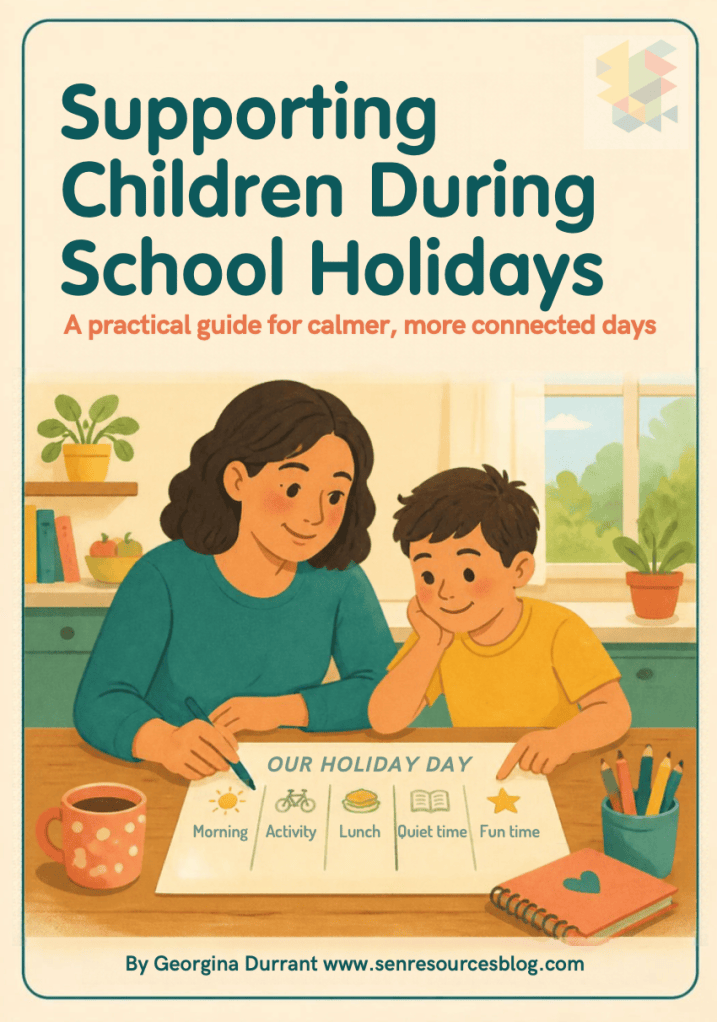
Download my PDF guide on supporting children over the holidays for families here
For some children, holidays can be stressful for a variety of reasons. Changes to their usual routine, increased time spent with siblings, and having more free time with less structure can all feel overwhelming. During the Christmas holidays in particular, the excitement, flashing lights, busy social calendars, and changes in food and daily activities can sometimes be a little too much for children to manage.
So, what can you do to help?
Parents are the experts when it comes to their own children, and what works for one child may not work for another. However, here are some strategies that I’ve found can help children feel calmer and more settled during holiday periods.
1. Maintain Familiar Routines or Create a New Holiday Routine
Children often thrive on routine because it helps them know what to expect from their day. School-age children become accustomed to a structured timetable and can sometimes feel unsettled when that structure suddenly disappears.
Creating a simple holiday routine doesn’t need to be complicated. It could be as straightforward as using pictures or written prompts on a piece of paper to map out the day: getting dressed, having breakfast, going on an outing, playing with toys, reading, or spending time outdoors.
Involving children in planning their day and regularly referring back to the schedule can help them feel a greater sense of control and ownership, which can reduce anxiety and uncertainty.
2. Be Consistent
We’re all guilty of relaxing the rules occasionally, especially when the children are off school. However, many children benefit from clear and consistent expectations.
Maintaining familiar boundaries and routines helps children understand what is expected of them and provides a sense of security. When rules remain consistent, children are often less likely to test limits because they know where they stand.
3. Promote Fairness
Holiday periods often mean spending much more time with siblings, and inevitably, issues of fairness can arise. This can be especially challenging when children are different ages and have different needs or privileges.
While achieving complete fairness isn’t always possible, discussing fairness openly can help avoid many disagreements. Encourage children to consider situations from another person’s perspective and explore what feels fair for everyone involved.
Giving children the opportunity to contribute to these conversations can help them develop empathy and take greater responsibility for resolving conflicts.
4. Make Time for One-to-One Connection
With family visits, social events, and the general busyness of the holiday season, it can sometimes be difficult to spend quality time individually with each child.
Yet even small moments of focused attention can make a significant difference to a child’s emotional wellbeing. It doesn’t have to be a full day or even a full hour. Reading a book together before bedtime, playing a quick game, or watching a favourite programme can help children feel valued and connected.
Sometimes, those few uninterrupted minutes are what children remember most.
5. Model Healthy Ways of Managing Stress
As parents, we often set the emotional tone for the household. Children are incredibly perceptive and often pick up on our stress, frustration, and anxiety.
I’ve noticed that when I’m stressed, my children’s behaviour can become more difficult. When I remain calm and positive, the atmosphere in the house often feels calmer too.
Children learn a great deal by observing how we respond to difficulties. While it’s important for them to see that adults find things difficult sometimes, it can also be a valuable opportunity to demonstrate positive coping strategies.
Of course, none of us manages every situation perfectly. On difficult days, seeking support from family, friends, or other trusted people can be beneficial for both parents and children.
6. Get Outside
It sounds simple, but never underestimate the power of fresh air.
Getting outside for a walk around the block, a trip to the park, or a family outing can often act as a reset button, even on the most challenging days. Physical activity, a change of scenery, and some time outdoors can have a surprisingly positive impact on everyone’s mood.
Many times, this simple strategy has helped my own family regroup and return home feeling calmer and more connected.
Final Thoughts
School holidays bring plenty of excitement, but they can also bring challenges for children who find changes in routine difficult. By providing structure, consistency, individual attention, and opportunities to talk about emotions, we can help children feel more secure and better equipped to manage the ups and downs of holiday life.
What strategies have you found helpful for maintaining calm and connection during the school holidays?
Download my PDF guide on supporting children over the holidays for families here


42 responses to “How to Manage Changes in Routine (and other causes of stress) for children over School Holidays”
I definitely agree about fresh air. There’s nothing quite so restorative for my daughter than running around outside even for 10 minutes. Well, maybe a hot bath. When she was an infant and cranky, she would perk up immediately once she was in water. #blogstravaganza
LikeLiked by 1 person