
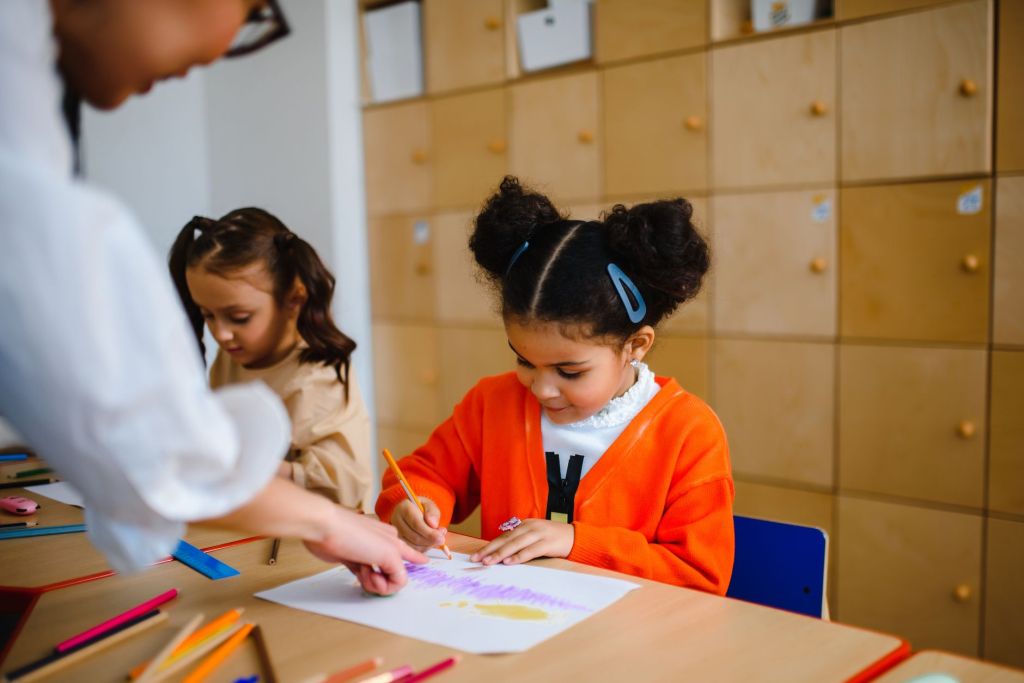
Think about a child. Not their diagnosis, not their EHCP targets, not their data. Just the child.
Now think about the things they find difficult in school. How many of those difficulties might actually be communication barriers?
When we hear the word communication, many of us immediately think about speaking and listening. However, communication is so much more than that. It is understanding instructions, processing information, asking for help, managing emotions, joining conversations, building relationships and making ourselves understood. It also isn’t always verbal communication, but symbols, signs, body language, pointing.
Communication sits at the heart of school life. It underpins learning, behaviour, wellbeing, relationships and belonging. Yet despite its importance, communication is often invisible. We carefully plan lessons, monitor progress and assess outcomes, but communication can become something we assume children will simply manage.
The reality is that the communication demands of school are enormous. From the moment a child arrives at school, they are expected to interpret social cues, follow instructions, understand vocabulary, switch attention, navigate friendships, ask for help and cope with change. Many children manage these demands successfully, but for others they can become significant barriers.
One of the challenges is that communication difficulties are often hidden. We see the unfinished work, the apparent lack of engagement or the challenging behaviour, but we do not always see the communication barrier underneath.
As a former SENDCO, I have lost count of the number of times I have heard a child described as “not listening”. When we look more closely, though, that is not always the case. Sometimes a child has heard every word that has been said, but by the time they have processed the instruction, the rest of the class has already moved on. Sometimes they have forgotten the first part of a multi-step instruction before the final part has been delivered. Sometimes they are still trying to work out what a word means while everyone else has started the task.
The issue is not effort. The issue is not motivation. The issue is often accessibility.
This is why I believe one of the most powerful questions we can ask ourselves is: Am I looking at won’t, or am I looking at can’t?
It is a simple question, but it can completely change our perspective. When a child does not start their work, are they refusing, or are they unsure what to do?
When a child becomes dysregulated, are they being challenging, or are they communicating overwhelm?
When a child walks away from a task, are they avoiding learning, or are they struggling to cope?
Behaviour is often the loudest form of communication available to a child. That does not mean every behaviour is caused by communication difficulties, but it does mean communication should always be part of the conversation. Instead of asking, “How do we stop this behaviour?”, we might ask, “What is this behaviour communicating?”
Creating communication-friendly schools does not require a complete overhaul of practice. In fact, the most effective strategies are often the simplest. Using fewer words, breaking instructions into smaller steps, providing visual support, allowing processing time and checking understanding can make a significant difference.
These approaches are often associated with SEND, but their benefits extend far beyond this. They support children learning English as an additional language, children who are anxious, children with literacy difficulties and, quite frankly, children who are tired, distracted or simply having a difficult day. In other words, they support all children.
This is why communication-friendly practice should not be viewed as a SEND initiative. It is good teaching. It is inclusive teaching. It is teaching that recognises that children access learning in different ways and that accessibility benefits everyone.
We often talk about inclusion, but inclusion is about more than simply being present in a classroom. True inclusion is about participation, and participation depends on communication. Children are far more likely to engage, contribute and develop confidence when they feel understood.
Ultimately, communication-friendly schools are not just supporting communication. They are creating environments where children can access learning, build relationships, experience success and develop a genuine sense of belonging.
And when children feel understood… things happen. They learn, they participate, they contribute, they belong, and they thrive.
For more information on SEND Strategies for Primary or Secondary please consider my books;
SEND Strategies for the Primary Years
SEND Strategies for the Secondary Years




You must be logged in to post a comment.