
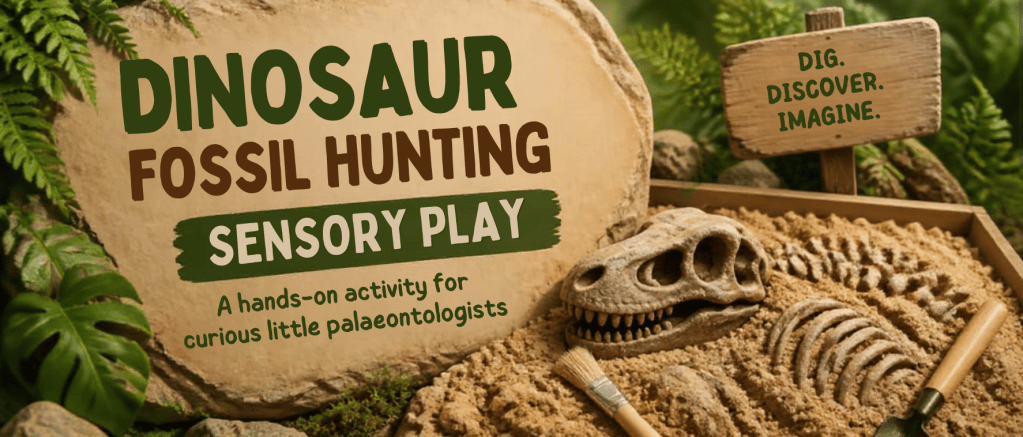
Looking for a simple dinosaur-themed activity that will keep little hands busy while supporting important developmental skills? This Dinosaur Fossil Hunting Sensory Play activity is always a huge hit with children and combines imaginative play, sensory exploration, and fine motor skill development all in one fun experience.
Whether your child is fascinated by dinosaurs or simply enjoys sensory play, this activity encourages them to become a real-life palaeontologist as they carefully excavate hidden dinosaur fossils from their “dig site”.
And the best part? It’s incredibly easy to set up using materials you may already have at home!
Dinosaur Fossil Hunting Sensory Play
Now, before any experts point it out, no, this isn’t exactly how fossil hunting works in real life! However, for younger children, it provides a fantastic introduction to the concept of fossils, archaeology, and scientific discovery in a way that is accessible, hands-on, and fun.
Children naturally love exploring and discovering hidden treasures. By creating a simple “fossil dig”, you can encourage curiosity, investigation, and imaginative play while developing a range of important skills.
What You’ll Need
To create your dinosaur excavation site, you’ll need:
- A tray, storage box, or shallow container
- Couscous, sand, rice, or kinetic sand
- Toy dinosaurs or pretend fossils
- A small paintbrush
- Optional extras such as magnifying glasses, measuring tapes, or explorer hats for added fun
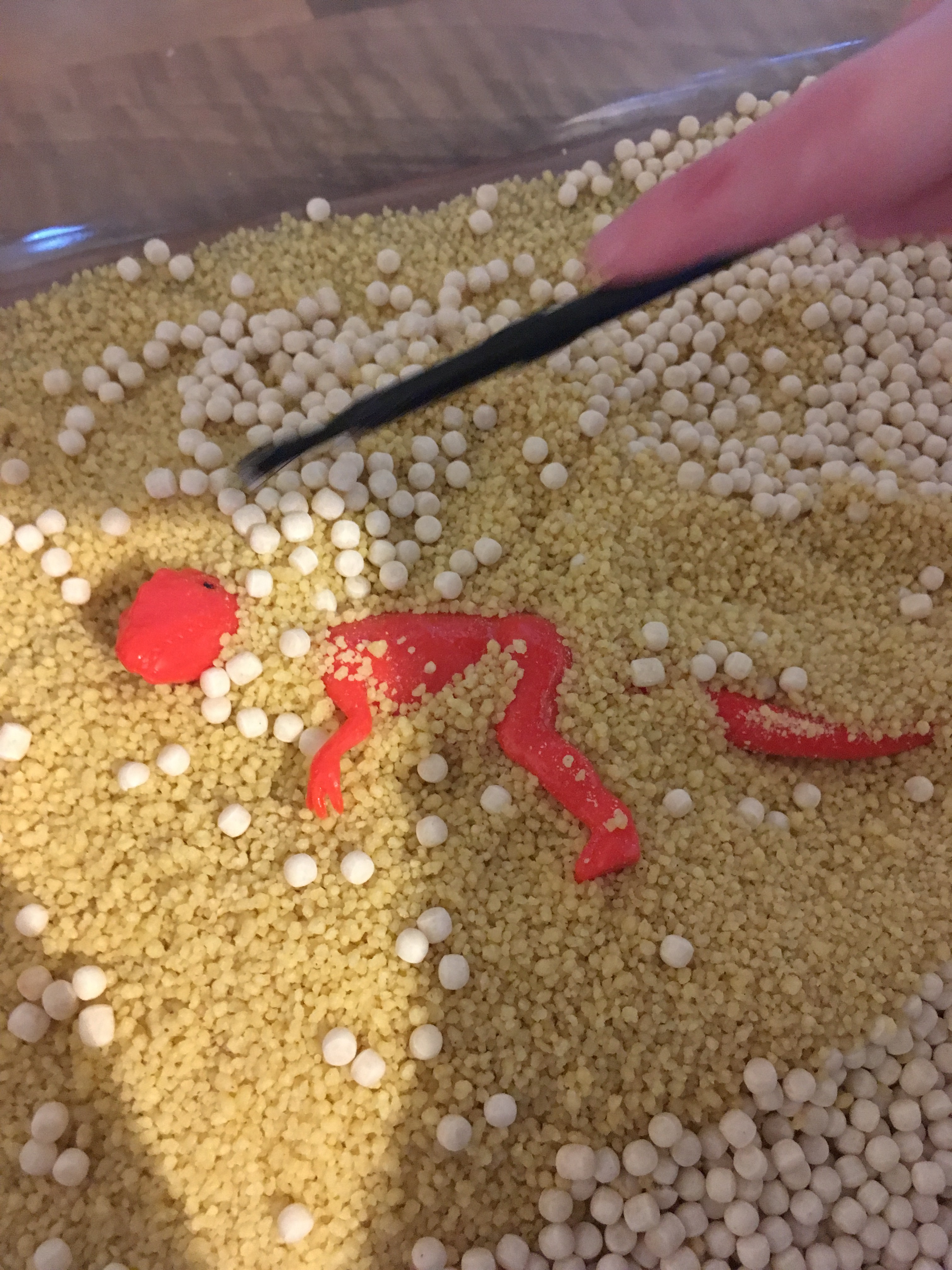
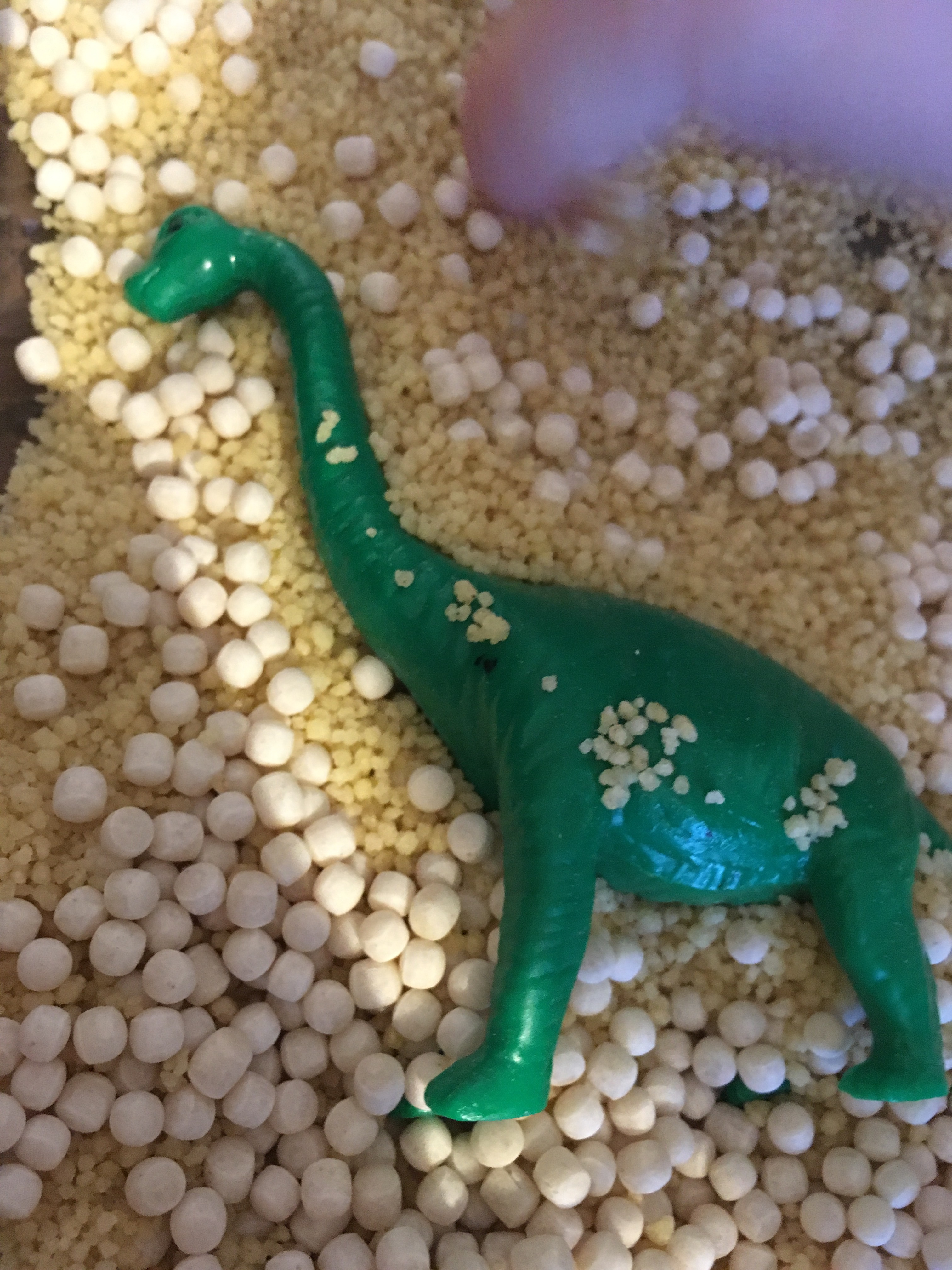
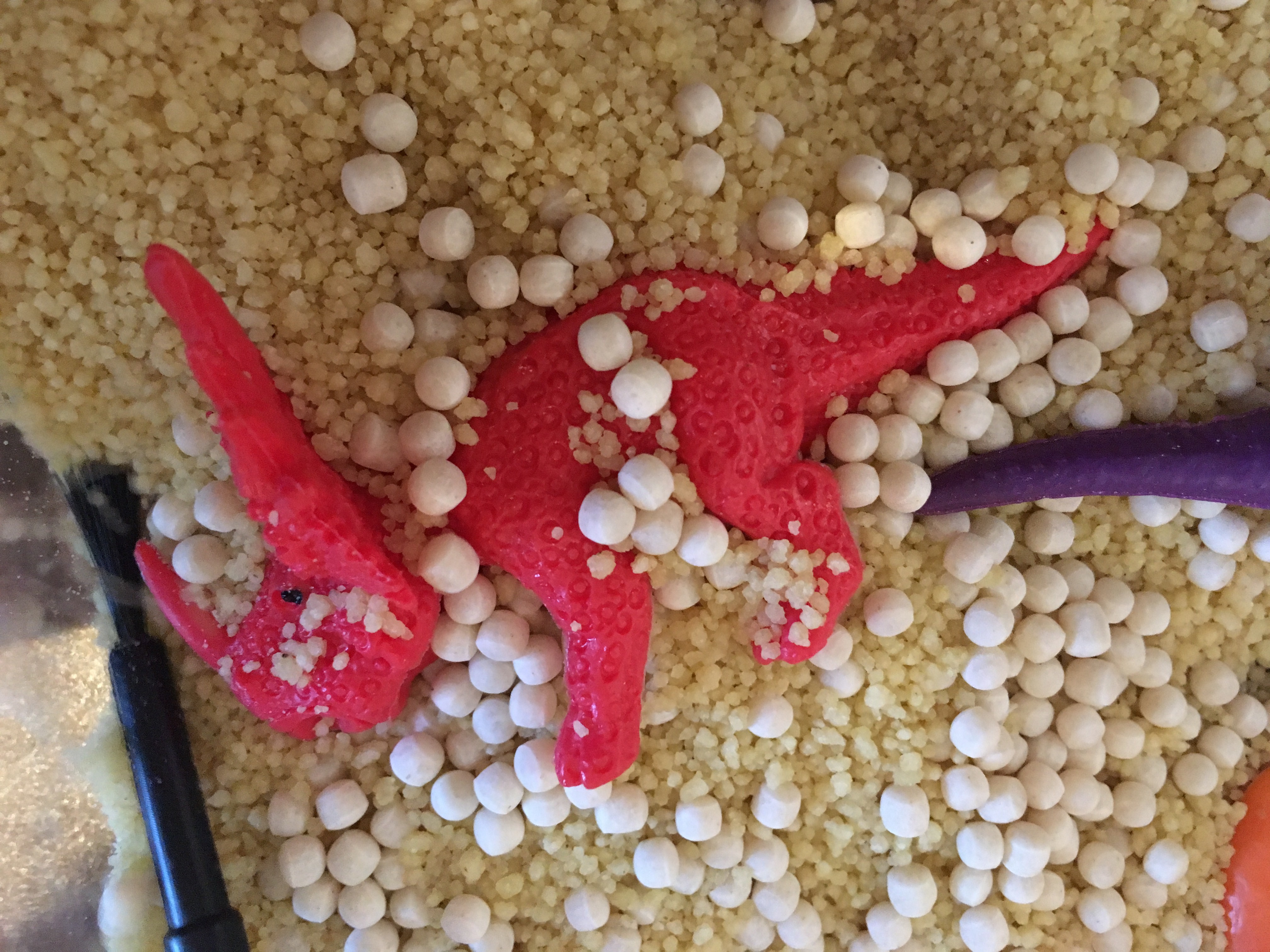
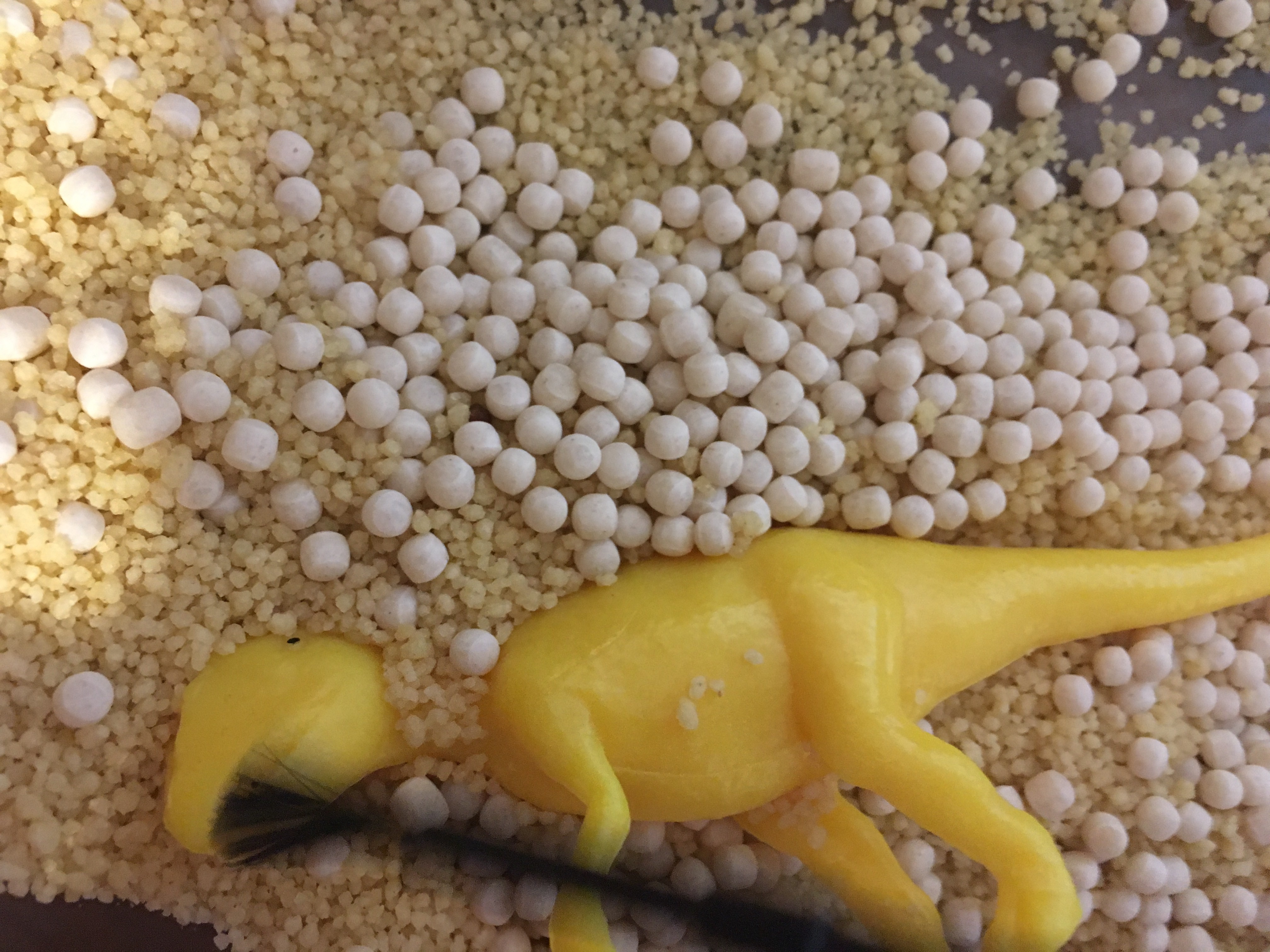
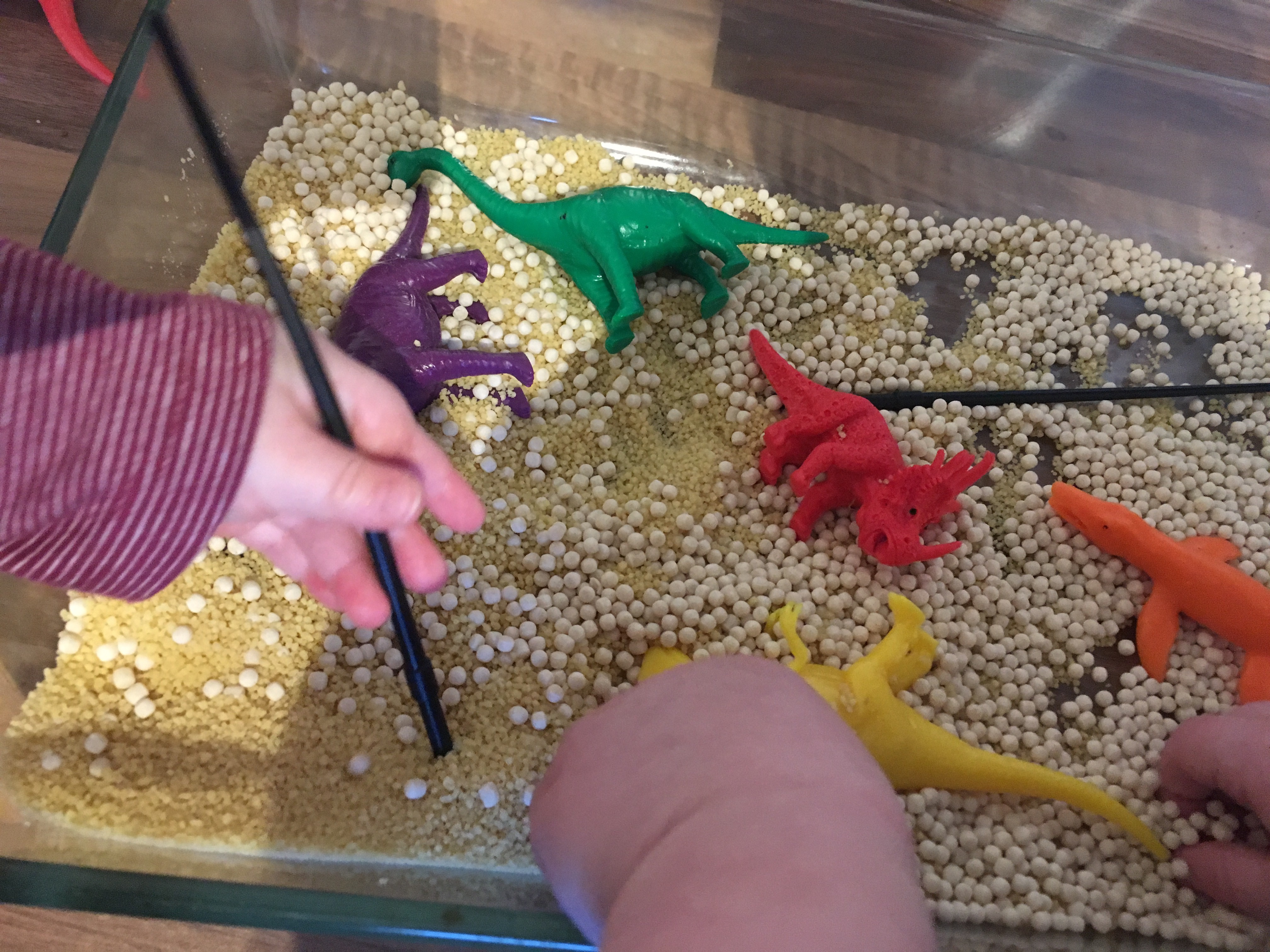
For our activity, we used two different sizes of couscous to create a more realistic texture and make the excavation site look a little more interesting.
How to Set Up the Activity
Setting up couldn’t be easier.
- Fill your tray with couscous, sand, or your chosen sensory material.
- Bury toy dinosaurs or pretend fossils beneath the surface.
- Give your child a paintbrush and encourage them to carefully search for hidden treasures.
- Once they discover a dinosaur, they can gently brush away the remaining material and uncover their exciting find.
Children often enjoy repeating this process over and over again, burying the dinosaurs themselves and creating new excavation sites for siblings, friends, or even adults to discover.
Extending the Play
Once children have uncovered all the dinosaurs, you can add extra challenges and learning opportunities:
- Sort dinosaurs by size.
- Count how many fossils have been found.
- Compare different dinosaur shapes.
- Talk about dinosaur names and habitats.
- Create stories about where the dinosaurs lived.
- Hide clues around the dig site.
- Use a magnifying glass to inspect discoveries.
You could even create a “Dinosaur Discovery Record Sheet” where children draw and record what they have found.
What Can Children Learn From This Activity?
Although this activity looks like simple play, it offers a wide range of developmental benefits.
Fine Motor Skills and Hand Strength
Using a paintbrush requires children to grasp, hold, and manipulate a small tool using controlled movements. These actions help strengthen the small muscles in the fingers, hands, and wrists that are essential for everyday skills such as drawing, colouring, using scissors, fastening buttons, and learning to write.
Activities that encourage a pencil-style grip can be especially helpful for children developing early handwriting skills.
Concentration and Attention
Carefully brushing away the sensory material takes patience and focus. Children need to work slowly and pay attention to details as they search for hidden fossils without immediately uncovering everything at once.
For some children, particularly those who find it difficult to sit still, activities like this can provide an engaging and motivating way to practise sustained attention.
Early Science Skills
This activity introduces basic scientific concepts through play. Children learn about exploration, observation, discovery, and investigation. It can also spark conversations about fossils, dinosaurs, prehistoric life, and the work of palaeontologists.
Children develop curiosity when they ask questions such as:
- What dinosaur is this?
- How old might it be?
- Where did dinosaurs live?
- How do scientists find fossils?
These discussions help build early scientific thinking and problem-solving skills.
Language Development
Sensory play creates endless opportunities for conversation.
You can introduce and practise vocabulary such as:
- Fossil
- Excavation
- Dig
- Discover
- Brush
- Bury
- Ancient
- Dinosaur
Children can describe what they find, explain what they are doing, and create imaginative stories around their discoveries.
Maths Skills
There are lots of opportunities to include early numeracy skills too:
- Counting dinosaurs
- Comparing sizes
- Sorting by type
- Identifying shapes
- Discussing position words such as under, beside, behind, and between
This makes learning feel natural and enjoyable.
Sensory Benefits
Many children find sensory activities calming and regulating. The repetitive action of scooping, pouring, brushing, and digging can be particularly soothing.
Sensory play allows children to explore different textures and materials while supporting relaxation and emotional wellbeing. It can provide a welcome opportunity to slow down, focus, and become fully engaged in an enjoyable activity.
Imagination and Creativity
One of the greatest benefits of open-ended activities like this is that children can take the play in their own direction. Today’s dinosaur excavation might become tomorrow’s prehistoric adventure, museum display, or dinosaur rescue mission.
There is no right or wrong way to play, allowing creativity and imagination to flourish.
A Few Tips
- Lay an old sheet or tablecloth underneath the tray for easier clean-up.
- Supervise younger children when using small objects.
- Encourage children to take their time and brush carefully rather than digging everything out at once.
- Join in yourself. Children often enjoy role-playing as explorers, scientists, or palaeontologists alongside adults.
Give It a Try!
This simple dinosaur fossil hunt is one of those activities that combines learning and play so seamlessly that children don’t even realise they’re developing important skills.
Whether you’re looking for a rainy-day activity, a dinosaur-themed learning experience, or simply a new sensory play idea, this excavation challenge is well worth trying.
Have a go and let us know how you get on!


57 responses to “Dinosaur ‘Fossil’ Hunting Sensory Activity ”
I love the idea of using couscous: brilliant! My children are obsessed with dinos at the moment and this activity looks great for them all to enjoy #sharingthebloglove
LikeLiked by 1 person