

What is ADHD?
ADHD stands for attention deficit hyperactivity disorder and it can affect both children and adults.
When people think of ADHD they often (stereotypically) think of a young boy with lots of energy struggling to sit still in lessons. But ADHD doesn’t always present as hyperactivity and it’s certainly not just boys that have ADHD – girls (& women!) have ADHD too.

Characteristics of ADHD
The main characteristics of ADHD are hyperactivity, impulsiveness and inattentiveness (but a child doesn’t have to have all three characteristics to have ADHD) Hyperactivity: Is when someone appears to have a lot of energy, struggles to sit still, needs movement and fidgets. Impulsiveness: This is where someone might say or do something without thinking about the consequences as much. Inattentiveness: This is when someone may struggle to concentrate, may ‘day dream’ , forget things and get bored easily.
You may be thinking- “But don’t all children have those characteristics at some point?” And in short – yes, they may well do, but when it is ADHD these characteristics impact on day to day life and can’t be explained by something else.

It’s also important to remember that these three characteristics aren’t negatives, each of them can bring advantages as well as difficulties. Children for example who have inattentiveness are also likely to be imaginative, creative and think outside the box. Children who are hyperactive or impulsive may also be very keen, enthusiastic, adventurous, driven and passionate about topics.

Types of ADHD
It’s believed that there are three main presentations or types of ADHD based on the characteristics mentioned:
– Hyperactive & impulsive
– Inattentive
– Combined hyperactive impulsive & inattentive
The most common ‘type’ of ADHD is the combined type.
Who to speak to if you suspect a child has ADHD.
Parents and teachers can’t diagnose a child with ADHD.
If you think your own child may have ADHD I’d always advise speaking to your school’s SENDCo (Special Educational Needs Coordinator) or alternatively you could speak to your GP (both of which should be able to discuss this with you and look at referring). Some families go privately for assessments.
If you’re a teacher who suspects a child in your class may have ADHD, speak to the child’s family and your school SENDCo.
Useful resources:
Here’s a collection of useful resources to help learn about supporting children with ADHD (if I’m missing some good resources, please let me know which in the comments!):
Books
ADHD an A-Z: Figuring it Out Step by Step by Leanne Maskell

ADHD is Our Superpower: The Amazing talents and Skills of Children with ADHD by Soli Lazarus.

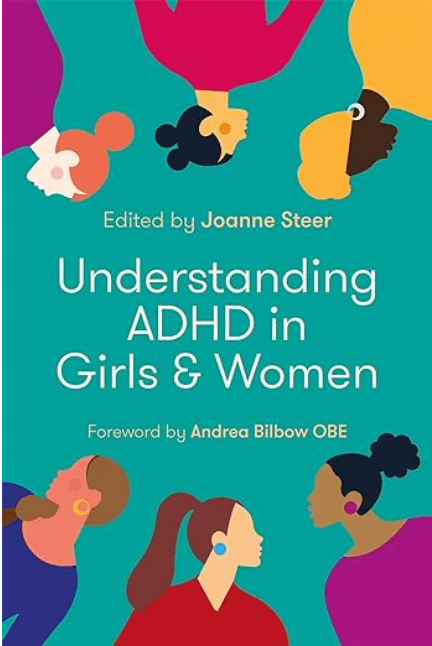
Understanding ADHD in Girls & Women by Joanne Steer
SEND Strategies For the Primary Years by Georgina Durrant

Me, Myself and ADHD by Molly Brooks-Dridge

The Parents’ Guide to ADHD Medicines by Peter Hill

UNMASKED: The Ultimate Guide to ADHD, Autism and Neurodivergence by Ellie Middleton

And last but not least…. One that’s not specifically written for parents of children with ADHD, as it’s about adults with ADHD – but as children with ADHD (obviously) become adults with ADHD I think this is an important book to consider:
Dirty Laundry: Why adults with ADHD are so ashamed and what we can do to help by Richard Pink and Roxanne Emery

Websites & other resources:
Here’s a collection of some useful websites for further reading, support and courses
- ADHD Foundation
- Additude Magazine
- Chatterpack – they have created a really useful guide ‘ADHD and me’ which can be found here
- Witherslack Group – have some free training on ADHD that you can access here
- Reach Out ASC – have a course called ‘What they don’t tell you about ADHD’ which you can access here
- ADHD+ Support – their website is here

 The SEN Resources Blog
You must be logged in to post a comment.